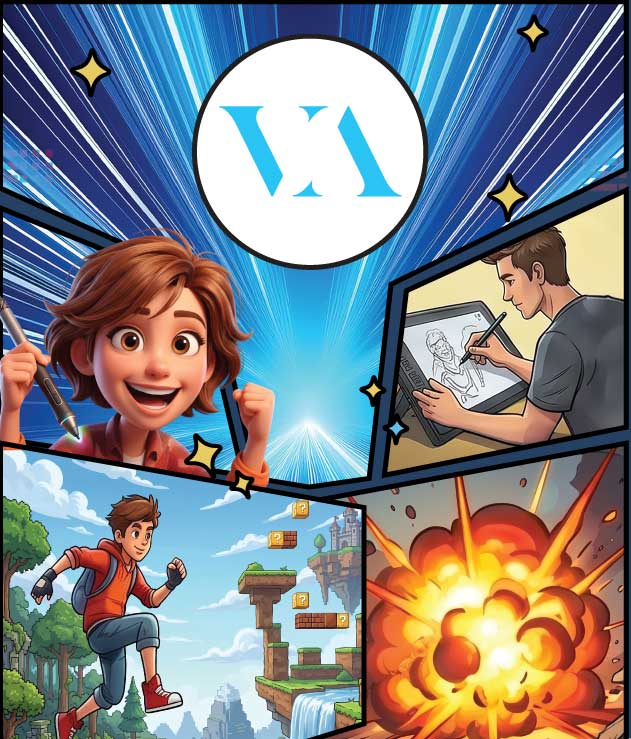
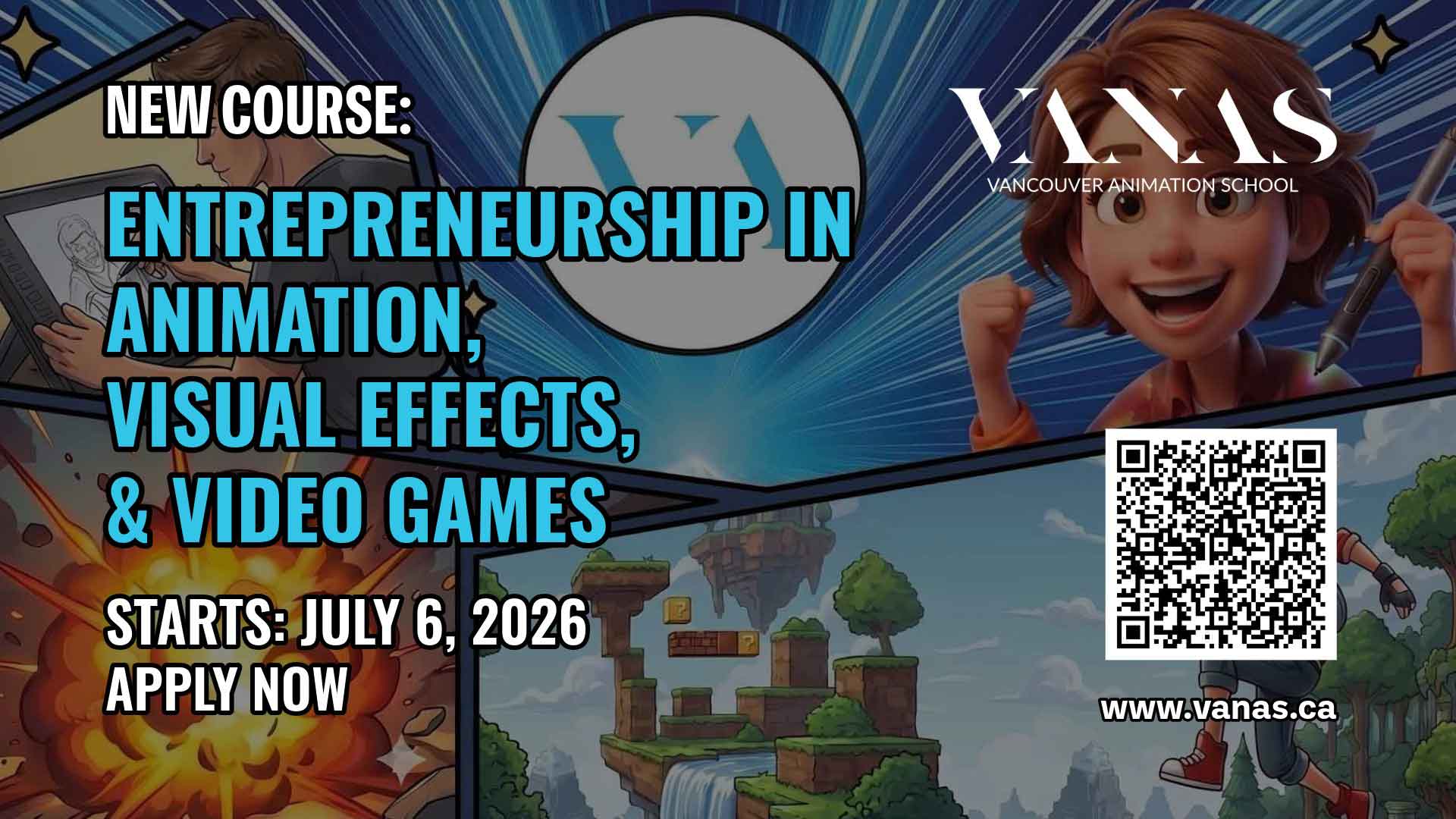
 Image: VANAS entrepreneurship course banner
Author: VANAS Team
VANAS Announces New Course in Entrepreneurship for Animation, VFX, and Video Games
Table of Contents
- Why Entrepreneurship Matters in Creative Media
- The New VANAS Course: A Product-Focused Mindset
- Week 1: From Creative Skills to Product Ideas
- Week 2: Designing Your Creative MVP
- Week 3: Building Visibility While You Build
- Week 4: Building, Finishing, and Launching Your MVP
- What Students Will Take Away
- Why This Matters for Animation, VFX, and Games
- How VANAS Brings Industry Context to Creative Business
- Final Thoughts
Why Entrepreneurship Matters in Creative Media
The world of animation, visual effects and video games has changed. For students and independent creators, success no longer depends only on landing a studio role. Today, creators can build products, services and experiences that reach audiences directly.
VANAS is announcing a new course that teaches that shift clearly: from thinking about portfolios and job titles, to thinking about creative products that can be shipped, sold, or shared with a community. It is built for artists and makers who want to turn their creative skills into something that can stand on its own.
The New VANAS Course: A Product-Focused Mindset
This course is not just about making better reels. It is about making ideas that work as products in animation, games or VFX. Students learn to identify real problems, find opportunity spaces, and build a simple launch plan around a creative concept.
The program is designed to move quickly. In four weeks, students complete a full creation cycle: idea, plan, visibility, execution, and launch. This is the kind of training that helps artists understand how their work can become a small business, a digital product, or a community-driven creative venture.
Week 1: From Creative Skills to Product Ideas
Students shift from thinking about jobs or portfolios to thinking in terms of creative products they can ship. They explore opportunities across animation, video games, and VFX, research market needs, identify problems, and develop product ideas that can become viable independent ventures.
Duration: 1 week
The first week is about discovery and framing. Students ask questions like:
- What creative problem can I solve with my animation or VFX ability?
- Who needs a new gaming experience, visual tool or storytelling product?
- What can I reasonably build and release in a short time?
Instead of focusing only on polished scenes, students look for ideas that meet audience needs. That could mean a short animation series, a playable game prototype, a visual effects toolkit, a social media creative campaign, or a productized service.
Week 2: Designing Your Creative MVP
Once a direction is chosen, students turn their idea into a focused product concept. They define who the product is for, what it does, and what the smallest shippable version looks like. Students learn how to scope projects realistically and create a Minimum Viable Product (MVP) blueprint.
Duration: 1 week
Week two is about simplicity and clarity. The goal is to avoid overdesign and instead define the smallest version of the product that still delivers value. In practice, students create:
- a clear audience profile,
- an experience map,
- a list of core features,
- a launch-ready MVP plan.
For creators in animation and VFX, that might mean a single pilot episode, a demo reel with an interactive angle, or a pack of reusable effects assets. For game creators, it might be a playable vertical slice or a prototype level with a clear hook.
Week 3: Building Visibility While You Build
Independent creators do not wait until a product is finished to share it. Students learn how to build visibility while creating by sharing progress, telling the story behind their work, and engaging with communities. They develop a simple marketing strategy to generate interest while building their MVP.
Duration: 1 week
This week teaches the truth many successful creators already know: momentum grows when you show progress. Students learn to:
- post update stories and behind-the-scenes content,
- capture attention with early visuals, concept art, or prototype clips,
- use social media and creative communities effectively,
- invite feedback that improves the product.
By the end of week three, every student has a visibility plan that fits their project and medium. They know where to share, how often to share, and how to keep their audience curious without overpromising.
Week 4: Building, Finishing, and Launching Your MVP
Students focus on execution, completion, and launch. They refine their creative product, prepare it for release, and present or launch their MVP. By the end of the course, students complete the full product creation cycle from idea to launch-ready project.
Duration: 1 week
The final week is action-focused. Students push through their build, polish the core experience, and prepare launch materials. That may include a short launch video, a product page, a portfolio presentation, or a shareable demo.
The emphasis is on finishing, because a shipped MVP teaches far more than an unfinished idea. Students learn to celebrate progress, gather early reactions, and use the launch as a foundation for future iteration.
What Students Will Take Away
At the end of the course, students have more than a project. They have:
- a product idea validated by research,
- a scoped MVP plan,
- a visibility and launch strategy,
- a working prototype or finished creative product,
- practical confidence in building independently.
These are the skills that help animators, VFX artists and game creators move from being service providers to being product makers.
Why This Matters for Animation, VFX, and Games
Animation, visual effects, and video games are creative industries where strong ideas and clear execution matter more than ever. The course helps artists understand how their work can be turned into a product that sells, attracts an audience, or becomes a showcase of their capability.
For animators, creativity can become a short series, a digital character pack, or an interactive storytelling experience. For VFX artists, it can become a toolkit, a branded demo, or a compelling sample of a unique visual style. For game designers, it can become a playable prototype, a level design concept, or a small indie game ready to attract players.
How VANAS Brings Industry Context to Creative Business
VANAS combines creative education with real-world context. The new course is designed to help students understand how the industry is evolving and how entrepreneurial skills fit into that picture.
Students learn from instructors who know what studios and independent teams need. They also learn to think beyond the studio pipeline, toward building their own creative ventures and understanding the product lifecycle.
Final Thoughts
Launching a new course in entrepreneurship for animation, VFX and video games is a strong signal: VANAS is helping creators adapt to the future of media. This course gives students a practical path from concept to launch, with weekly steps that keep the work focused, visible and actionable.
If you are an artist or creator who wants to move beyond the portfolio mindset and build something that can be shared, sold, or scaled, this course is a powerful first step. It shows how entrepreneurship is not a separate skill—it is the way creative work becomes memorable, marketable and meaningful.
VANAS Online Animation School offers training across animation, visual effects, and video games, with courses designed for the next generation of storytellers and digital makers.
Key Takeaways
- The course teaches creators to think in product terms, not just portfolio terms.
- Weekly modules guide students from idea discovery to launch-ready MVP.
- Visibility is built while the product is under development.
- The final week emphasizes finishing and launching a viable creative project.
- This is the kind of training that empowers independent creators in animation, VFX and games.
Discover the new course and explore how your creative work can become a launch-ready product.